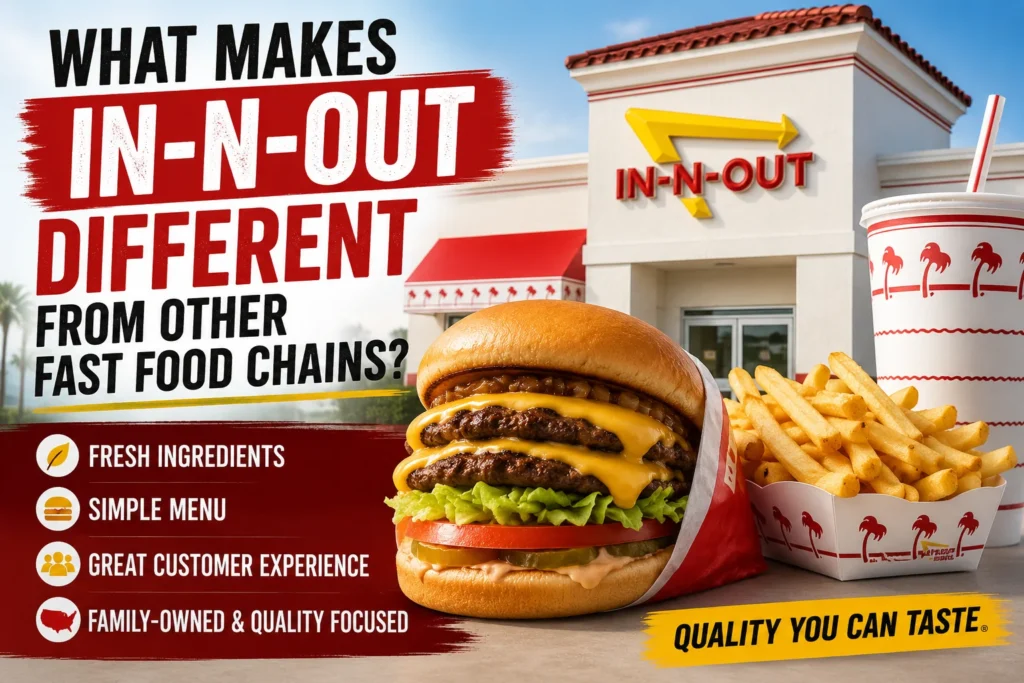
What Makes In-N-Out Different From Other Fast Food Chains?
Ask any road tripper about their favorite West Coast burger stop, and one name comes up again and again. In-N-Out isn’t just popular. It’s beloved in a way that most fast food chains never manage to be.
People wait in line for 20 minutes for a burger they could get somewhere else in five. They drive past three other chains to reach one. Something about this company keeps customers loyal for decades, and it isn’t marketing tricks or app-only discounts.
The real answer sits in a handful of choices the Snyder family made in 1948 and never walked back.
History of In-N-Out
Harry and Esther Snyder opened the first In-N-Out in Baldwin Park, California, on October 22, 1948. The stand was tiny, barely bigger than a garage, and it sold just burgers, fries, and soft drinks.
That same year, Harry built something that changed fast food forever: a two-way speaker box. Customers could order without leaving their car. It’s considered the first modern drive-thru system in the country.
Growth stayed slow on purpose. By the time Harry passed away in 1976, the chain had only 18 locations, while McDonald’s already had thousands. The Snyders weren’t chasing scale. They were protecting a standard.
Today In-N-Out has grown to more than 400 restaurants across several states, led by Lynsi Snyder, the founders’ granddaughter. She’s kept the company private and has said publicly that she has no plans to franchise it, even as she expands into new regions.
Check Also: Firehouse Subs Menu
What Makes In-N-Out Different From Other Fast Food Chains?
Fresh Ingredients and Simple Menu
Walk into any In-N-Out kitchen and you won’t find a single freezer for beef. Patties are made from fresh, never-frozen meat, and potatoes are hand-cut into fries right there in the store.
The core menu has stayed almost identical since 1948: hamburger, cheeseburger, Double-Double, fries, shakes, and soft drinks. That’s it. No wraps, no salads, no rotating seasonal gimmicks.
This restraint is intentional. Fewer items mean the kitchen can focus on doing a small number of things very well instead of stretching staff thin across a long menu.
There’s also the “secret menu,” a set of off-menu combinations regulars have passed along for years, like Animal Style burgers and fries topped with grilled onions, extra spread, and melted cheese. It’s never been officially printed, but employees know it by heart. For anyone planning a visit and wondering what a meal actually costs today, a current In-N-Out Menu Prices breakdown is a useful reference before you order.
Why Customers Love In-N-Out?
Ask longtime fans what keeps them coming back, and the answers rarely mention advertising. They talk about taste, consistency, and how the food feels made rather than assembled.
A few reasons show up over and over:
- Burgers taste the same in Fresno as they do in Las Vegas
- Fries are cut and fried fresh, not shipped frozen
- Employees are famously friendly and well trained
- Prices have stayed lower than many competitors despite inflation
- The company pays staff above minimum wage, which shows in service quality
Even celebrities and chefs have publicly praised the chain. Anthony Bourdain was known to seek it out whenever he traveled through California, and Julia Child once named it her favorite fast food stop.
Social media search data backs this up too. Terms like “why is In-N-Out so good” and “is In-N-Out better than other burger chains” show up regularly in autocomplete suggestions, which tells you people aren’t just eating there. They’re actively trying to explain why they like it so much.
Part of the answer is psychological. When a menu stays the same for 75 years, customers build memories around it. A first date, a road trip stop, a late-night drive with friends. The food becomes tied to the moment, and that’s hard for a chain that reinvents its menu every quarter to replicate.
How It Differs From Other Fast Food Chains?
Most major fast food brands compete by adding menu items, running limited-time promotions, and expanding as fast as possible through franchising. In-N-Out has done almost none of that.
No franchising. Every location is company-owned and operated. This gives leadership direct control over food quality and training instead of relying on independent franchise owners to maintain standards.
No freezers. Competing chains rely heavily on frozen, pre-portioned ingredients to keep costs predictable across thousands of locations. In-N-Out’s smaller footprint lets it ship fresh product regularly instead.
No menu bloat. While other chains have expanded into breakfast, coffee, chicken sandwiches, and beyond, In-N-Out’s menu has barely changed in over 75 years.
Slower expansion. The company opens new stores carefully, often only after building the supply infrastructure to support them, rather than rushing into new markets.
Employee pay and culture. In-N-Out has a long history of paying above the industry standard and promoting from within, which tends to reduce turnover and improve service.
Ownership structure. Most national chains answer to shareholders or franchise networks with their own priorities. In-N-Out remains privately owned by the Snyder family, so decisions about quality and pace of growth aren’t pressured by quarterly earnings targets.
Compare that to a typical national burger chain, where a single company might oversee thousands of independently owned locations. Quality can vary block to block because each franchisee makes their own calls on staffing, cleanliness, and ingredient handling. In-N-Out sidesteps that problem entirely by owning every store itself.
The result is a chain that feels almost like a local family business, even though it now serves millions of customers a year.
Frequently Asked Questions
What makes In-N-Out different from other fast food chains?
It uses fresh, never-frozen beef, keeps a small, unchanged menu, avoids franchising, and pays employees above industry average, which together create a more consistent product.
Why do people love In-N-Out so much?
Fans point to fresh ingredients, friendly service, fair prices, and the reliable taste that hasn’t changed in decades.
Does In-N-Out use fresh or frozen beef?
Fresh. The company doesn’t operate freezers for its beef patties in any of its restaurant kitchens.
Is In-N-Out available outside California?
Yes. It now operates in several Western and Southern states, including Nevada, Arizona, Utah, Texas, Oregon, Colorado, Idaho, Washington, and Tennessee, with more expansion planned.
Is In-N-Out considered healthier than other fast food chains?
It’s not marketed as a health food option, but the short ingredient list and fresh preparation appeal to customers who prefer less processed fast food.