Why Isn’t KFC Called Kentucky Fried Chicken Anymore
Why KFC Isn’t Called Kentucky Fried Chicken Anymore? Ask ten people why Kentucky Fried Chicken became KFC in 1991, and you’ll probably get ten different answers and most of them will be wrong. More than three decades later, the story is still tangled up with rumors about mutant chickens, secret state fees, and corporate cover-ups. The real explanation is far less dramatic, but it says a lot about how fast-food brands manage image, health trends, and global growth.
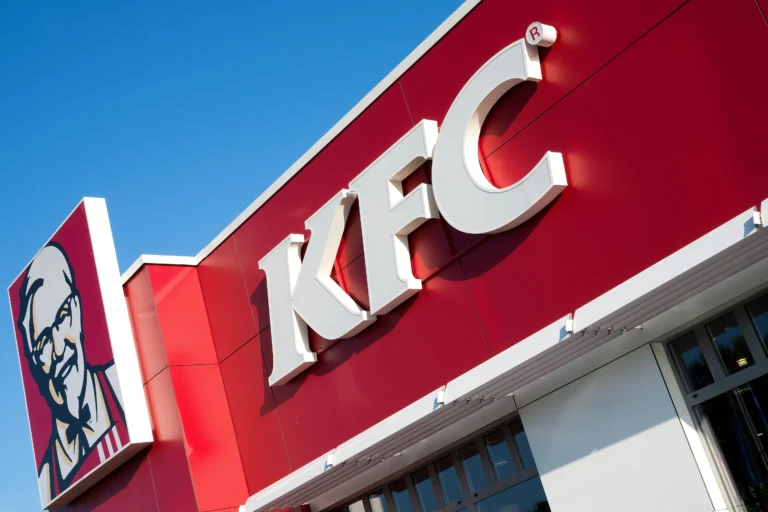
Why KFC Isn’t Called Kentucky Fried Chicken Anymore?
The Real Reason: Distancing the Brand From “Fried”
By the late 1980s, Kentucky Fried Chicken was facing softening sales as American shoppers grew more label-conscious, and the word “fried” had become a liability. Company leadership said as much at the time: the brand wanted a more contemporary image, and “fried” didn’t fit that image anymore.
Around the same period, the chain rolled out a skinless fried chicken option first branded Lite’n Crispy and later Skinfree Crispy for customers who might otherwise skip the bucket altogether. Trimming the name to three letters let the company keep selling the same product while quietly softening how it talked about it.
There was a practical branding calculation too. Short, recognizable initials were becoming the norm for consumer brands trying to stand out on signage, the same way a well-known cola brand leaned harder into its own nickname around that era. A shorter name reads faster on a highway billboard and translates more easily in markets where “Kentucky” carried no particular meaning in Quebec, the chain has long operated as PFK, short for “Poulet Frit Kentucky,” a sign the brand was already thinking beyond U.S. borders.
Myth #1: Kentucky Trademarked Its Own Name
The most persistent legend claims the Commonwealth of Kentucky trademarked the word “Kentucky” and started charging companies licensing fees to use it, supposedly forcing the chain to abandon its full name rather than pay up. Kentucky did indeed trademark its name around 1990 to help generate state revenue, and businesses were technically on the hook for a fee to use it commercially.
But fact-checkers have found no solid evidence connecting that trademark to the 1991 rebrand. Contemporary business reporting ties the decision to marketing strategy, not a licensing dispute, and the company has never cited a state fee as its reason. The timing was suspicious enough to fuel the rumor for decades, but suspicious timing isn’t proof.
Myth #2: The “Mutant Chicken” Legend
The wilder version of the story insists KFC was raising genetically engineered birds, animals bred with extra legs, or without beaks and feathers and had to drop “chicken” from its name because the creatures technically weren’t chickens anymore.
It’s pure urban legend, but it did real damage: the rumor spread so widely across China that KFC’s parent company pursued legal action, and courts there ultimately found several firms liable for defamation over the false claims. Yum Brands has pushed back on the story directly, noting that a company capable of actually engineering birds with extra limbs would be in line for a science prize, not a lawsuit.
You might also like to read “Viral US Food & Coffee Chains”
From a Corbin Gas Station to a 30,000-Restaurant Empire
The brand’s roots trace to Harland Sanders, who began serving his Southern-style fried chicken at a roadside service station and café in Corbin, Kentucky, during the Great Depression. The first franchise opened in Utah in 1952, and by 1964, Sanders sold the growing company to a group of investors for a reported $2 million, staying on as its public face.
Today, KFC operates under Yum! Brands alongside Pizza Hut and Taco Bell, with more than 30,000 restaurants across roughly 150 countries.
A Name That Never Fully Disappeared
Here’s the twist most retellings skip: “Kentucky Fried Chicken” never actually vanished. When KFC brought Colonel Sanders’ image back to the forefront of its advertising in 2015, the full “Kentucky Fried Chicken” name returned with him, appearing alongside the KFC logo on buckets and packaging.
The corporate name is KFC Corporation, but the heritage branding still shows up whenever the company wants to lean into nostalgia, proof that the 1991 change was about image management, not erasing the brand’s origins.
The Next Chapter: KFC’s “Open House” Era
KFC is once again reworking its image. The chain recently announced a broader overhaul that includes updated packaging, an expanded boneless menu, more than 20 new sauces, and modernized restaurant designs built around hospitality rather than pure speed.
The centerpiece is a new prototype called Open House, opening in McKinney, Texas, near Yum! Brands’ Plano headquarters combines table service, drive-thru, and takeout in a single next-generation location. It’s the same pattern the brand followed in 1991: keep the product, Colonel Sanders, and the secret blend of herbs and spices intact, while modernizing everything around them.
You might also like to read “KFC Menu and Price List ”
Quick Frequently Asked Questions
When did Kentucky Fried Chicken officially become KFC?
The company adopted the KFC name and a new logo on February 12, 1991.
Why did KFC really change its name?
To move away from the word “fried” amid health-conscious trends and to modernize the brand for a global, multilingual audience, not because of a trademark dispute or a menu-item technicality.
Is the “mutant chicken” story true?
No. It’s an urban legend that KFC’s parent company has publicly and legally disputed.
Did Kentucky actually trademark its own name?
Yes, around 1990, but there’s no solid evidence it drove KFC’s decision to shorten its name the following year.
Does KFC still use the name “Kentucky Fried Chicken” anywhere?
Yes. It reappeared on buckets and in branding after 2015 alongside the Colonel Sanders imagery, and it remains the company’s full legal name.